
Can You Load Heavy Equipment on a Trailer Safely?
Last Updated: October 25, 2026
Quick Summary
To load heavy equipment safely, plan the move first, match the trailer and ramps to the machine's full weight, and place the heaviest part over the trailer axles with roughly 10 to 15 percent of total weight on the tongue. Then line up straight, climb slowly, stop over the axles, and secure the machine at four or more rated tie-down points.
Keep the ramp angle shallow, usually no steeper than 15 degrees, and measure it rather than eyeballing.
One spotter directs the move while everyone else stays outside the exclusion zone.
Use at least four tie-down points, two front and two back, on the frame or designated points.
Recheck strap and chain tension after the first few kilometers as the load settles.
Stop and call for help when the ground is soft or sloped or the ramps are underrated.
Table of Contents
Step 1: Plan the Move and Assess the Risks
Loading heavy equipment onto a trailer is safe when you plan first and lift second. Loading heavy equipment without a plan is how machines tip, ramps fail, and people get hurt.
Start with a written risk assessment. Walk the route, check the machine, and name the hazards before you commit.
Check the delivery route for low wires, soft shoulders, and tight turns
Note the equipment's weight, width, and height
Confirm permits for oversized loads before you book the trailer
Identify who operates the machine and who guides it
Watch out: skipping the permit check is the mistake that stops a job at the roadside. If you are unsure how transport rules apply to an oversized move, consult relevant Canadian regulations and guidelines to confirm before you commit.
Step 2: Match the Trailer to the Machine
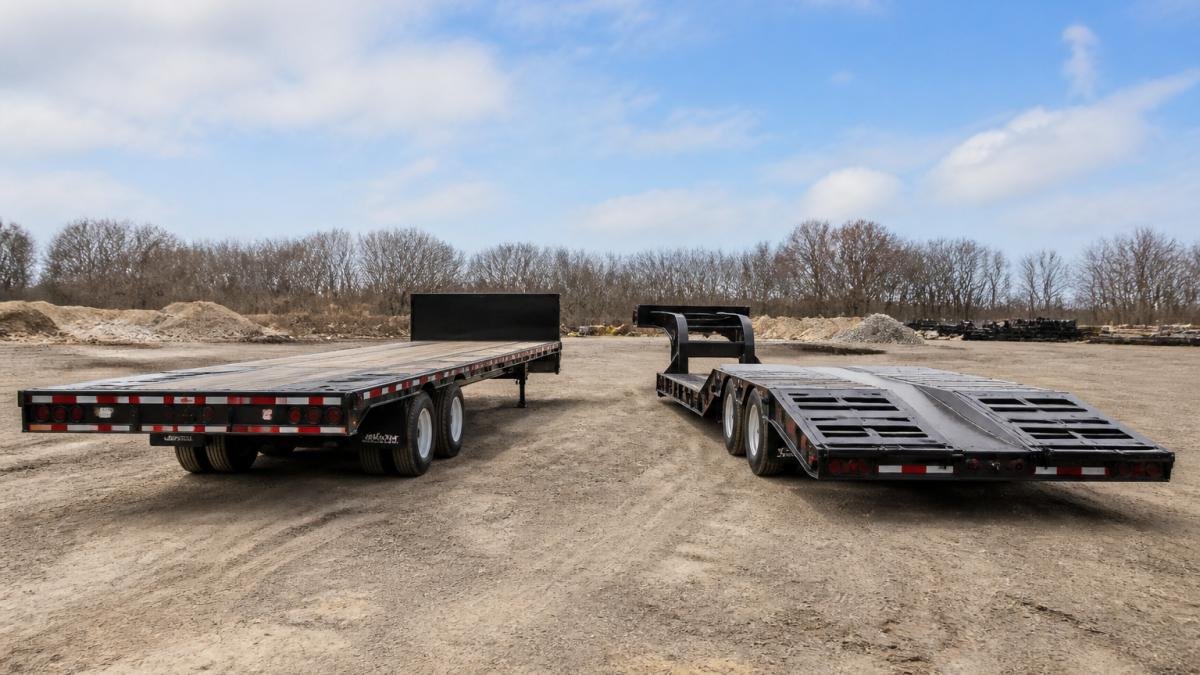
The right trailer is the one rated for your machine's full weight, not its empty weight. Trailer style matters as much as size. A flat deck suits compact excavators and skid steers. A float handles larger earthmoving equipment and farm tractors.
Match these before you load:
Load capacity: trailer rating must exceed machine weight plus attachments
Deck length and width: machine plus tie-down room, not just machine
Ramp rating: ramps must carry the full machine weight
Deck surface: clean, dry, and free of debris
A common mistake is renting by deck length alone. Weight and ramp rating decide whether the trip is legal and safe.
Step 3: Check Weight and Plan Heavy Equipment Load Distribution
Correct heavy equipment load distribution keeps the trailer stable and the tow vehicle in control. Put too much weight on the tail and the trailer sways. Put too much on the tongue and the steering goes light.
Follow these rules:
Place the heaviest part of the machine over the trailer axles
Keep roughly 10 to 15 percent of total weight on the tongue
Lower buckets, blades, and attachments before you tie down
Center the machine side to side so the deck sits level
Weigh the load when you can. A certified scale removes the guesswork and gives you a number to show if you are stopped.
Step 4: Inspect Ramps, Deck, and Ground Before You Load
A five-minute inspection prevents most loading accidents. Check the ramps, the deck, and the ground under the trailer before the machine moves. This is also the step where equipment type changes what you look for.
Ramp Inspection
Look for cracks, bent rails, worn pins, and deformed lips on the ramps
Confirm ramps are latched, pinned, and rated for the full machine weight plus attachments
Check that ramp feet sit flat on firm ground and cannot kick out under load
Clear mud, ice, gravel, and oil from the ramp surface, traction matters more on the ramp than on the deck
Confirm the ramp-to-deck transition is flush; a lip or gap can catch a track or caster
Ramp Angle and Alignment
Keep the ramp angle shallow, most practitioners treat 15 degrees as the practical ceiling for rubber-tired equipment, and tracked machines can usually handle a slightly steeper angle because the tracks grip the surface. Measure the angle rather than eyeballing it: a 1-in-4 slope is about 14 degrees, and a 1-in-3 slope is about 18 degrees, which is too steep for most wheeled loaders. Align the machine dead center with the ramps before climbing; a track or tire that runs off the edge of a ramp is a common cause of rollovers.
Deck Inspection
Sweep the deck clear of gravel, mud, and loose debris
Check the deck surface for rust-through, soft spots, and bent crossmembers
Confirm the deck is dry, wet steel and wet aluminum both lose grip
Verify that stake pockets, D-rings, and anchor points are intact and not cracked
Ground Conditions
Ground conditions matter more than most people expect. Soft ground lets a trailer settle mid-load, and that shifts the ramp angle under the machine. Check for:
Soft spots, recent fill, and buried voids under the trailer wheels
Slope across the loading area, even a small side slope shifts weight to one side
Stability of the tow vehicle: chock the wheels and confirm the parking brake is set before the machine moves
Overhead obstructions such as wires, branches, and building overhangs along the loading path
If the ground is soft, sloped, or unstable, stop. Do not load on ground that cannot hold the trailer and tow vehicle steady. Move to firm, level ground or bring in a different transport method.
Equipment-Specific Checks
Tracked machines: confirm the ramp surface will not be damaged by steel tracks, and check that the ramp lip can take the track's point load
Wheeled equipment: check tire pressure and tread; a soft tire changes the machine's height and can catch on the ramp lip
Articulated machinery: lock the articulation before loading so the machine cannot fold mid-ramp
Equipment with attachments: lower and lock buckets, blades, and booms before the climb; a raised attachment changes the center of gravity and can strike the deck or the tow vehicle
Step 5: How to Load Heavy Equipment on a Trailer
To load heavy equipment on a trailer, line up straight, climb slowly, and stop the machine over the axles before you lower it. Rushing this step is where most incidents start.

Ramp Angle, Alignment, and Surface Checks
Keep the ramp angle shallow, usually no steeper than 15 degrees. Align the machine dead center with the ramps. Check that ramp feet sit flat on firm ground, and clear any mud or ice from the ramp surface.
Operator Communication and Exclusion Zones
One person directs the move. The operator follows hand signals from a single spotter. Everyone else stays outside the exclusion zone, clear of the ramp base and the machine's path. No phones, no standing behind the trailer.
Step 6: How to Secure Heavy Equipment for Transport
Securing the load means tying the machine to the trailer at its designated anchor points with rated gear. Use heavy-duty chains or ratchet straps rated for the machine's weight. Attach to the frame or the manufacturer's tie-down points, never to brake lines, fuel lines, or sheet metal.
Choosing Restraints
Chains and binders: best for heavy machines and rough roads; check the working load limit on each chain and binder
Ratchet straps: lighter and faster to tension, but check the strap rating and inspect for cuts and UV damage
Wheel chocks and cradles: supplement the tie-downs and stop the machine from rolling if a strap loosens
Match the restraint's working load limit to the machine's weight. A common pattern is to use restraints whose combined working load limit exceeds the machine weight, with a safety margin.
Anchor Points
Use at least four tie-down points, two front and two back
Attach to the frame or the manufacturer's designated tie-down points
Never attach to brake lines, fuel lines, sheet metal, or steering components
Route chains and straps so they do not rub on sharp edges or cross the machine's controls
Equipment-Specific Securement
Tracked machines: chock the tracks and tie down at the frame; tracks can creep on smooth decks
Wheeled equipment: cradle or chock the wheels in addition to the tie-downs
Articulated machinery: lock the articulation and secure the front and rear sections separately
Attachments: lower buckets, blades, and booms, lock them in place, and tie down any loose components
Post-Loading Verification
Recheck tension after the first few kilometers, straps and chains settle as the load shifts
Confirm the parking brake is set and the machine is in gear or park
Verify that chocks and blocking are still in place
Check that lights and signals on the trailer and tow vehicle are working
A quick stop after a short distance catches straps that have settled. Retighten anything loose before you continue.
Step 7: Run a Heavy Equipment Transport Safety Checklist
Run this heavy equipment transport safety checklist every time, even on short hauls. It takes minutes and catches the errors that cause damage.
Check | What to Confirm | Frequency |
Weight and balance | Load centered, tongue weight right | Before loading |
Ramps and deck | Clean, rated, latched | Before loading |
Tie-downs | Four or more points, tight | After loading |
Loose parts | Buckets and blades secured | After loading |
Lights and signals | Working on trailer and tow vehicle | Before departure |
Recheck | Straps and chocks after first stop | During trip |
If any line fails, fix it before the wheels turn.
When Loading Conditions Are Unsafe, Stop and Call for Help
Some loads should never be a do-it-yourself job. Stop and call for help when the ground is soft or sloped, when the ramps are underrated, or when the machine is too heavy for the trailer you have. Wind, ice, and poor lighting are reasons to wait.
Loading a machine that outweighs your gear risks a tip-over, a dropped load, or a roadside fine. That is the point to bring in a trained operator with the right flat deck or float. If you would rather hand off the move, contact us for reliable transport services and we will help you plan the next step.
The safest load is the one you planned before you lifted a thing.
Frequently Asked Questions
What should I check before loading heavy equipment onto a trailer?
Check the trailer's rated load capacity against the machine's operating weight, including attachments and any fuel or debris on board. Inspect the deck for cracks, loose planks, and debris, and confirm the ramps are rated for the load and properly attached. Verify the ground under the ramps is firm and level, and that the tow vehicle and hitch are rated for the combined weight. A short pre-trip inspection catches most problems before the machine is halfway up the ramp.
How do you calculate weight and load distribution for heavy equipment?
Start with the machine's operating weight from the manufacturer's spec sheet, then add attachments, buckets, and counterweights. Compare that total to the trailer's gross vehicle weight rating and the tow vehicle's towing capacity. For balance, aim to place the machine's centre of gravity slightly ahead of the trailer axles, with roughly 10 to 15 percent of the total trailer weight on the hitch. Weigh the loaded rig at a certified scale to confirm you are within limits.
How do you secure heavy equipment for transport?
Use the machine's designated tie-down points and heavy-duty chains or ratchet straps rated for the load. Use at least four securement points, pulling in opposing directions so the machine cannot shift forward, back, or sideways. Cradle the wheels or tracks with chocks and blocking, lower attachments to the deck, and lock loose components. Recheck tension after the first few kilometres, since straps can settle once the load shifts on the road.
What precautions should workers take around heavy equipment during loading?
Keep everyone except the operator and one trained spotter outside an exclusion zone around the ramps and trailer. The spotter should stay visible to the operator and use agreed hand signals or radios. Nobody stands between the machine and the trailer, and nobody walks under a raised attachment. Wear high-visibility clothing, and stop the job if the ramp shifts, the ground softens, or the machine starts to track off-centre.
A machine that outweighs your trailer is a risk no schedule justifies. J&M Disposal Inc. provides flat deck and float services for construction and agricultural equipment, backed by a locally owned team and equipment sized for oversized loads. Get started with J&M Disposal Inc. and move your heavy machinery safely.
Comments