
How Do You Calculate the Replacement Value of Construction Machinery?
Last Updated: November 8, 2026
Quick Summary
To calculate replacement value, add the current unit price of a like-for-like machine, an inflation adjustment, and ancillary, installation, and commissioning costs. The formula is current unit price plus inflation adjustment plus ancillary, installation, and commissioning costs. Document every quote and assumption so insurers and auditors can follow the number.
Replacement value is the all-in cost to buy a comparable machine today, delivered, set up, and ready to work.
Replacement cost new is the sticker price only, with no delivery, setup, or extras included.
Adjust older quotes with the formula: adjusted price = original price × (current index ÷ original index).
Ancillary, delivery, and inflation costs came to about 17% of the total in the worked excavator example.
Present the result as a range rather than a single figure, because a range is defensible and false precision is not.
Moving machinery or clearing a site?
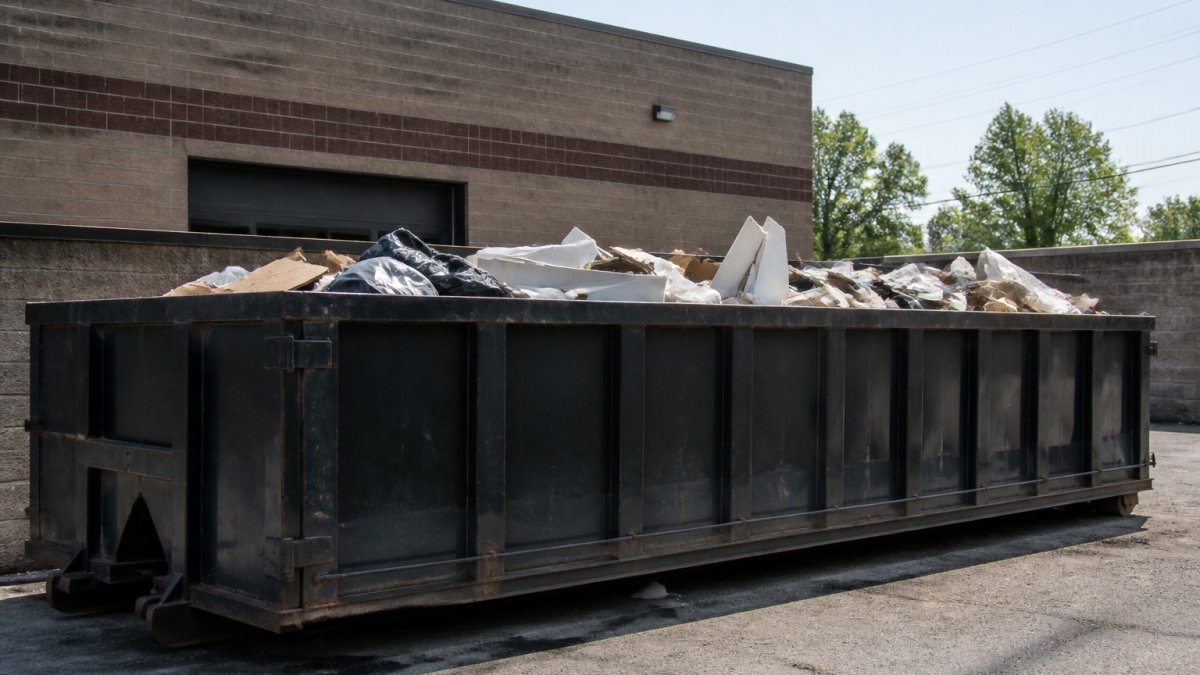
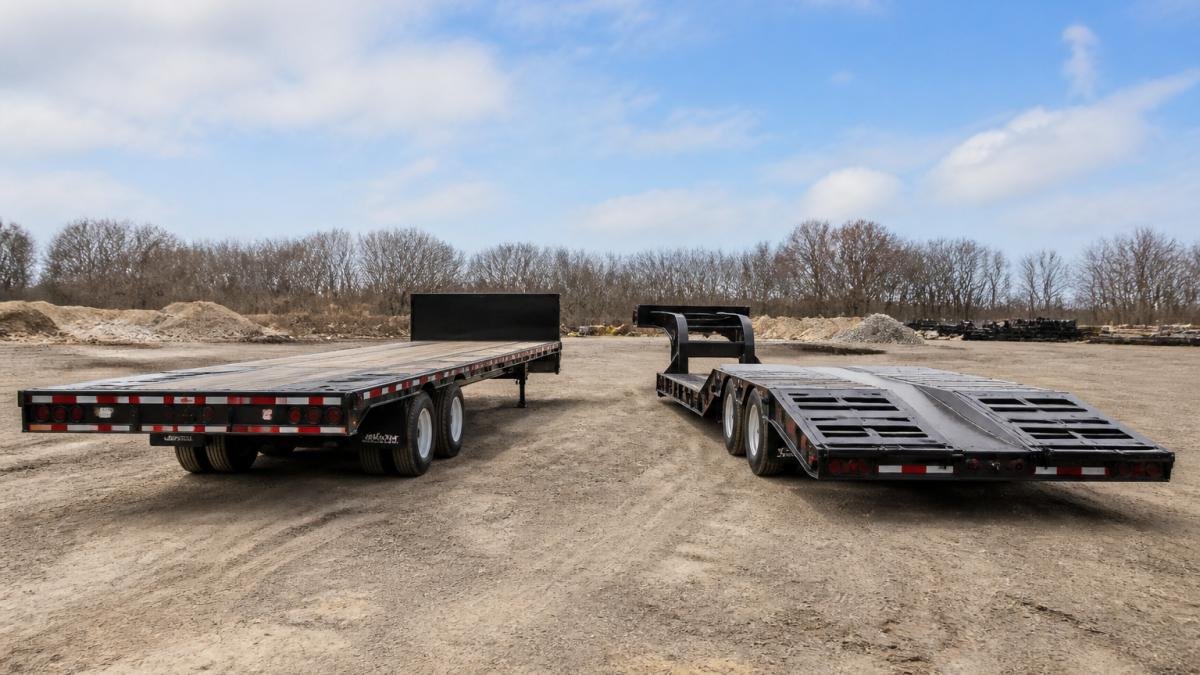
J&M Disposal Inc. provides flat deck and float transport plus roll-off bins from 5 to 40 yards.
Table of Contents
What Replacement Value Means for Construction Machinery
Replacement value is the total cost to buy a comparable machine today, delivered to your yard, set up, and ready to work. It is not what you paid for the machine years ago, and it is not what a dealer would give you for it used.
That definition matters more than most owners realize. Insurance schedules, asset registers, and capital budgets all lean on it. Get it wrong and you either overpay for coverage or under-insure a machine you cannot afford to lose.
Replacement Value vs. Replacement Cost New vs. Market Value vs. Actual Cash Value
These four terms get used interchangeably. They should not be.
Replacement value: The all-in cost to replace the machine with a like-for-like unit today, including delivery, setup, and commissioning.
Replacement cost new: The sticker price of a brand-new equivalent machine. No delivery, no setup, no extras.
Market value: What a willing buyer would pay for your used machine on the open market right now.
Actual cash value: Replacement cost new minus depreciation. What the machine is worth in its current condition.
The difference is often large. A ten-year-old excavator might carry a replacement value well above its market value, because replacing it like-for-like means buying a newer unit at today's prices.
Step-by-Step: How to Calculate Replacement Value of Construction Machinery
The formula is simple: current unit price plus inflation adjustment plus ancillary, installation, and commissioning costs. The work is in the details.

Step 1: Establish the Like-for-Like Replacement Specification
Write down what the machine actually is before you price anything. Like-for-like means matching size class, power, attachments, and capability, not just the model name.
A common mistake is valuing a stripped-down unit against a fully loaded one. Do not do that. Build the spec sheet from the machine you actually operate:
Operating weight and size class (for example, 20-tonne class versus 14-tonne class)
Engine power and emissions tier, Tier 4 Final units carry different pricing and aftertreatment than older Tier 3 machines
Attachment package: buckets, thumbs, couplers, hammers, grapples, forks
Cab and control configuration: joystick pattern, climate control, rear camera, grade-control readiness
Undercarriage type and condition (steel versus rubber, shoe width)
Hours, service history, and any major component rebuilds
That spec becomes your shopping list. Anything that does not match is a different machine and a different number. If the exact configuration is no longer produced, document the closest current equivalent and note the substitution, insurers and auditors accept a documented equivalent, not an undocumented one.
Step 2: Gather Current Unit Pricing and Adjust for Inflation
Get quotes from dealers on the like-for-like spec. Use current unit price, not last year's invoice. If you are working from older data, adjust it with a price index.
A simple inflation adjustment looks like this:
Adjusted price = Original price × (Current index ÷ Original index)
That formula keeps your estimate honest when dealer quotes are slow to arrive.
Gather pricing from more than one source where you can: a dealer quote for the base machine, a separate quote for attachments, and a transport quote for delivery.
Step 3: Add Ancillary, Installation, and Commissioning Costs
The purchase price is not the replacement value. Add the extras that make the machine ready to work:
Freight and delivery, including permits, escort vehicles, and lowbed charges for oversize loads
PDI and setup: pre-delivery inspection, fluid top-ups, and dealer preparation
Attachment installation and hydraulic setup where the coupler or hammer requires plumbing
Operator training and familiarization for new controls or grade systems
First fill and fluids, plus any initial consumables
Permit or registration fees where they apply, and licensing for road-legal support equipment
Required modifications: guarding, fire suppression, or site-specific safety fit-outs
These indirect costs add up fast on heavy iron. Skipping them is the most common reason replacement values come in too low. A practical pattern is to build the ancillary lines as a percentage of base machine price for a quick check, then replace that percentage with actual quotes wherever one exists, the percentage is a sanity check, not a substitute for a quote.
Document every assumption in the same row as the cost. When an insurer or auditor asks how you arrived at a number, the paper trail does the talking.
Building an Equipment Replacement Cost Estimate Template
A working equipment replacement cost estimate template has five columns: line item, source, current cost, inflation factor, and adjusted total. Build it once in a spreadsheet and reuse it for every machine in your fleet.
Here is the structure we would use:
Line Item | Source | Current Cost | Inflation Factor | Adjusted Total |
Base machine | Dealer quote | Quote figure | Index ratio | Base × factor |
Attachments | Dealer quote | Quote figure | Index ratio | Base × factor |
Freight | Transport quote | Quote figure | Fuel index | Base × factor |
Setup and PDI | Dealer service | Quote figure | Labor index | Base × factor |
Training | Internal estimate | Estimate | Labor index | Base × factor |
Keep the source column filled in. When an insurer or auditor asks how you arrived at a number, the paper trail does the talking.
Construction Equipment Depreciation Calculation and Remaining Useful Life
Depreciation and replacement value answer different questions. Depreciation tells you what the machine has lost in value.
The most common method is straight-line depreciation:
Annual depreciation = (Purchase price − Salvage value) ÷ Useful life
Say a machine cost a set amount, has an expected salvage value, and a ten-year useful life.
Remaining useful life is the flip side. If the machine has run six of those ten years, it has four years left.
Track annual maintenance costs against replacement asset value. When repairs start climbing past a healthy ratio, the machine is telling you something.
Actual Cash Value vs Replacement Cost Equipment: Which Figure to Use
Use replacement cost for insurance and capital planning. Use actual cash value when you want to know what the machine is worth today in its current condition.
The actual cash value vs replacement cost equipment question comes down to purpose:
Insurance: Replacement cost coverage pays to replace the machine. Actual cash value pays out the depreciated figure (Actual Cash Value vs. Replacement Cost). The premium difference is real, but so is the gap at claim time.
Asset management: Replacement value anchors your capital reserve target.
Sale or trade: Market value and actual cash value are the relevant numbers, not replacement value.
Pick the figure that matches the decision. Mixing them up is how fleets end up underinsured.
Construction Equipment Transport Costs in the Replacement Budget
Transport is part of replacement value, and it is the line most owners forget.
Two things drive the number: how far it travels and how it rides. A flat deck suits lighter, lower machines. Our guide on flat deck vs lowbed for construction machinery breaks down which fits your equipment.
For a method to price the haul itself, see how to calculate cost per km for equipment hauling. Build that figure into your replacement budget and your estimate stops leaking money.
Worked Example: Replacement Value for a Mid-Size Excavator
Here is the calculation in practice, using illustrative figures to show the method. Swap in your own dealer quotes and index values; the arithmetic is what matters.
Assume a 20-tonne excavator in good condition with 6,000 hours, a thumb, a hydraulic quick coupler, and a grading bucket.
Build the rows:
Line Item | Source | Current Cost (CAD) | Inflation Factor | Adjusted Total (CAD) |
Base machine | Dealer quote (4 months old) | 285,000 | 1.025 | 292,125 |
Attachments | Dealer quote (current) | 38,000 | 1.000 | 38,000 |
Freight | Transport quote (current) | 6,500 | 1.000 | 6,500 |
Setup and PDI | Dealer service (current) | 4,200 | 1.000 | 4,200 |
Training | Internal estimate | 1,800 | 1.000 | 1,800 |
Replacement value |
|
|
| 342,625 |
The replacement value is CAD 342,625. The base machine alone is CAD 285,000, so ancillary, delivery, and inflation account for roughly CAD 57,625, about 17% of the total.
Now run the same machine through an inflation-adjusted scenario.
A sensitivity check is worth the extra five minutes. Recalculate with the base machine 5% higher and 5% lower, and with freight 20% higher to reflect a remote site. Present the result as a range, for example, CAD 325,000 to CAD 360,000, rather than a single figure. A range is defensible; false precision is not.
Once you have that number, the next question is usually how to move the machine. Our 7-step guide to preparing an excavator for transport covers the prep work that keeps the move safe and on schedule.
Get Your Machinery Moved and Your Site Cleared
Knowing your replacement value is half the job. The other half is acting on it, whether that means insuring the fleet properly or moving equipment between sites.
We handle equipment moving with flat deck and float services built for construction and agricultural loads. If you are staging a move, our guidance on how to secure construction equipment for safe transport is worth five minutes before the truck backs in.
Wondering whether your load is safe to trailer? Read can you load heavy equipment on a trailer safely before you commit.
Replacement value is not a number you guess once and file away. It moves with prices, and your fleet changes with every job.
Frequently Asked Questions
What costs should be included in construction machinery replacement value?
Replacement value should capture everything needed to put an equivalent machine back to work. That means the current purchase price of a like-for-like unit, freight and delivery, applicable taxes, setup and commissioning, attachments and work tools, operator training, and any allocated overhead or contractor's profit on the install. Ongoing costs like fuel, maintenance, and insurance are ownership costs, not part of the replacement figure. Keep each line item documented so an insurer, lender, or auditor can trace the number back to a source.
How is replacement value different from actual cash value?
Replacement value is what it costs to buy an equivalent new machine today, with no deduction for wear. Actual cash value takes that replacement cost new and subtracts accumulated depreciation to reflect the machine's current worth. In an insurance claim, actual cash value pays out the depreciated figure, while replacement cost coverage pays enough to replace the unit. For budgeting and asset management, track both: replacement value for planning future capital, actual cash value for book and claims purposes.
How does depreciation affect the replacement value of used machinery?
Depreciation does not change replacement value itself; it changes the gap between replacement value and what your current machine is worth. Using straight-line depreciation, subtract salvage value from the purchase price and divide by useful life in years, then multiply by the machine's age. A unit with a long remaining useful life holds more of its value, while one near the end of its service life has a wide gap to the replacement figure. That gap is the number to watch when deciding whether to repair or replace.
What documents are needed to support an equipment replacement value estimate?
Keep dealer quotes or current market listings for a like-for-like unit, the original purchase invoice, manufacturer specification sheets, maintenance and repair records, hour-meter readings, and any transport or setup invoices. Add producer price index data or dealer price lists used for inflation adjustments, and note the date each figure was captured. If the machine is financed, include the loan or lease documents. A dated, sourced file makes the estimate defensible for insurance schedules, lender requirements, and internal capital planning.
Comments