
How to Calculate Cost Per Km for Equipment Hauling
Last Updated: October 23, 2026
Quick Summary
To calculate cost per km for equipment hauling, add all fixed costs (truck payment, insurance, registration, yard rent) to all variable costs (fuel, maintenance, driver pay, tolls, permits), then divide the combined total by the kilometres driven. For a single job, total the fixed and variable costs tied to that haul and divide by the loaded and empty kilometres.
Split every expense into fixed costs that land monthly and variable costs that scale with distance.
Build a fuel surcharge as a separate invoice line so diesel spikes don't eat your margin.
Divide total job cost by loaded kilometres only to spread deadhead cost across paid miles.
Add a per-km maintenance reserve of roughly 10-15% contingency from your own service invoices.
Divide total fixed costs by contribution per km to find the break-even distance you must run.
Table of Contents
Step 1: Separate Fixed vs Variable Costs in Logistics
Cost per km is the total cost of running a haul divided by the kilometres driven. It is the single number that tells you whether a job makes money or quietly loses it.
The fix starts with splitting every expense into two buckets. This is the fixed vs variable costs in logistics split, and it is the foundation of every accurate haulage rate.
Fixed Costs That Apply Whether the Truck Moves or Not
Fixed costs land every month, loaded or empty. They do not care about your annual mileage.
Truck payment or lease
Vehicle insurance premiums
Registration and licensing
Add these up for a full year, then divide by 12 for your monthly baseline.
Variable Costs That Scale With Every Kilometre
Variable costs rise with distance calculation. Drive more, pay more.
Fuel efficiency and diesel
Maintenance costs (oil, tires, brakes)
Permit fees for oversized load moves
Pro Tip Track fuel and maintenance per trip, not per month. A monthly average hides the expensive runs, and those are the ones that eat your profit margin.
Step 2: Use the Cost Per Km Formula for Equipment Hauling
The cost per km formula is simple: total operating expenses divided by total kilometres driven. That is the whole calculation. Everything else is just getting the inputs right.
Here is how to build it:
Add all fixed costs for the year.
Add all variable costs for the same period.
Divide the combined total by the kilometres driven.
The result is your cost per kilometer.
For a single job, use the same logic on a smaller scale.
Many operators find their true cost sits higher than expected once depreciation and insurance are included. That gap is where thin freight rates turn into losses.
Step 3: Build a Fuel Surcharge Calculation for Heavy Haul
A fuel surcharge calculation for heavy haul protects you when diesel prices jump. Without one, a spike in fuel costs comes straight out of your margin.
The common approach works like this:
Set a base fuel price in your rate sheet.
Track the current price at the pump.
For every cent above the base, add a set amount per km.
Heavy loads burn more fuel, so a loaded flatbed carrying equipment needs a higher per-km surcharge than an empty return. Build the surcharge as a separate line on the invoice so customers see exactly what they pay for.
Watch Out Baking fuel into a flat rate without a surcharge clause means you absorb every price increase for the length of the contract. On a long haul, that can wipe out the entire profit margin.
Step 4: Account for Deadhead Kilometres and Route Optimization
Deadhead kilometres are the empty miles you drive to reach a pickup or return home. They cost the same as loaded miles but earn nothing.

Route optimization cuts deadhead. Plan pickups so the truck returns loaded when possible.
To price deadhead correctly:
Map the full route, including the empty legs.
Count every kilometre, loaded or not.
Divide total job cost by loaded kilometres only.
Quote from that number.
That last step is the one most guides miss. You spread the empty-mile cost across the paid miles, so the rate reflects reality.
Step 5: Add Maintenance, Insurance, and Permit Fees
Maintenance costs, vehicle insurance, and permit fees are the three expenses that quietly sink haulage budgets. Generic trucking guides treat them as one line item. Heavy equipment hauling cannot, because each one behaves differently on a float trailer than on a dry van. This is the section most cost-per-km guides skip, and it is where your rate either holds or bleeds.
Maintenance: Build a Per-Km Reserve From Your Own Records
Heavy equipment transport puts far more strain on a truck than general freight. A 40,000 lb excavator on a float loads the suspension, brakes, and tires in ways a palletized load never does.
Pull your last 12 months of service invoices for the tractor and the trailer separately.
Total parts and labor for each.
Divide each total by the kilometres that unit ran in the same period.
Add a contingency of roughly 10-15% for the unexpected (a blown tire on a shoulder, a bent ramp cylinder).
The result is your maintenance cost per km. Review it quarterly. A common pattern is that trailer maintenance runs higher than operators expect because float decks, ramps, and tie-down points take abuse that a van body never sees.
Insurance: Separate the Tractor From the Cargo
Insurance for heavy equipment transport costs more than standard coverage, and the reason matters for your calculation. You are insuring two different risks: the tractor and trailer (physical damage, liability) and the cargo (the equipment itself, which may be worth more than the truck).
Add the annual premium to your fixed costs and divide it across your expected kilometres. But before you do, check two things with your broker:
Whether your cargo coverage has a per-load limit that a high-value machine would exceed.
Whether your policy requires specific tie-down or securement practices that affect how you load.
If a single machine is worth more than your cargo limit, you either buy a rider for that move or decline the job. Either way, the cost belongs in the per-km figure for that haul, not spread across the year.
Permits: The Cost That Changes With Every Route
Permit fees apply to oversized load moves, and they are the least predictable line in a heavy haul quote.
Build a permit checklist you run before every quote:
Dimensions: width, height, length, and weight of the loaded unit, measured, not estimated.
Permit type: single-trip vs. annual, and whether the route crosses more than one jurisdiction.
Escorts: when a pilot car or police escort is required, and how many.
The Ontario Ministry of Transportation oversize/overweight permit guidance outlines what permits a heavy haul may need and is a useful starting point for route-specific rules.
Pilot car and escort costs are easy to forget because they are not a government fee.
Pro Tip Keep a permit log by route. After a few moves you will have real numbers for common lanes instead of guessing each time, and your quotes get faster and more accurate.
Key Takeaway Every permit, inspection, escort, and compliance cost belongs in your total cost of ownership. If it is not in the calculation, it is coming out of your pocket. Step 6: Set Your Rate With a Flat Deck Transport Rate Sheet Template A flat deck transport rate sheet template turns your cost per km into a price you can quote with confidence. Build it once, update it as costs change. The version below is built for heavy equipment, so it includes the lines a generic trucking template leaves out: permits, escorts, and trailer-specific maintenance. The Template Line Item Your Figure How to Fill It Fixed cost per km ____ Annual fixed costs ÷ annual km Variable cost per km ____ Fuel + driver + maintenance per km Trailer maintenance per km ____ Trailer service total ÷ trailer km Deadhead allowance ____ Empty km ÷ loaded km Fuel surcharge ____ Current pump price vs base Permit and compliance ____ Per-move average from your permit log Pilot car / escort ____ Per-move average where required Total cost per km ____ Sum of all lines Target profit margin ____ Your chosen markup Quoted rate per km ____ Total cost × margin A Worked Example Numbers make the template real. The figures below are illustrative, not a rate card; substitute your own. Suppose your annual fixed costs are $48,000 and you expect to run 60,000 km. Fixed cost per km is $0.80. Total cost per km: $0.80 + $1.10 + $0.15 + $0.25 + $0.10 + $0.20 = $2.60. With a 15% margin, your quoted rate is about $2.99 per km. How to Use It on a Real Quote Measure the loaded dimensions and weight of the machine. Map the full route, including empty legs, and count every kilometre. Pull your per-km figures from the template. Add permit and escort costs for that specific route from your permit log. Multiply by loaded kilometres, then add the margin. Show the fuel surcharge and permit lines separately on the invoice so the customer sees what they pay for. Build this as a spreadsheet with the per-km figures in one cell block and the job inputs in another. Change the fuel price or the route distance and the quote updates automatically. That is the difference between a template you fill in once and a tool you use on every quote.
Watch Out A template is only as good as its inputs. If your fixed-cost figure is a year old or your permit log is empty, the quoted rate will look precise and still be wrong. Update the inputs quarterly.
Step 7: Find Your Break-Even Point and Profit Margin
Your break-even point is the number of kilometres you must drive to cover all costs. Below it, you lose money. Above it, you profit.
To find it, divide your total fixed costs by your contribution per km (your rate minus variable cost per km).
Track two numbers every month:
Total expenses against revenue
Profit margin per job
A job that looks busy can still lose money if the cost per kilometer is higher than the rate.
Common Mistakes to Avoid When Calculating Cost Per Km
The biggest error is leaving out depreciation. A truck loses value every year, and that loss is a real cost. If it is not in your total expenses, your rate is too low.
Other mistakes we see often:
Forgetting deadhead kilometres in the quote
Using a monthly fuel average instead of per-trip tracking
Ignoring administrative overhead and software costs
Get the calculation right and every quote starts from a real number. That is how trucking logistics stays profitable.
Frequently Asked Questions
What is the difference between fixed and variable costs in equipment hauling?
Fixed costs stay the same whether the truck drives or sits idle: insurance, licensing, truck payments, and storage. Variable costs rise with every kilometre: fuel, tires, maintenance, and driver pay. To get an accurate cost per km, total your annual fixed costs, divide by your annual mileage, then add your per-kilometre variable costs. Mixing the two together is the most common reason haulers underprice their flat deck and float work.
How do I account for fuel surcharges in my hauling cost calculations?
Track your actual fuel consumption in litres per 100 km, then apply the current diesel price to get a fuel cost per km. A fuel surcharge passes that cost to the customer separately from your base rate, so rate changes in diesel do not eat your margin. Recalculate the surcharge monthly or quarterly using posted diesel prices, and state the formula in your quote so customers see exactly how it is applied.
How do I factor in deadhead kilometres when pricing equipment moves?
Deadhead kilometres are the empty kilometres between your yard and the pickup point, or between drop-off and the next job. Add them to the billable distance before dividing your total trip cost. If a move is 80 km loaded but 45 km each way empty, price the full 170 km. Skipping deadhead is one of the fastest ways to lose money on heavy equipment transport, especially on remote farm or jobsite pickups.
Why is it important to include maintenance and insurance in transport cost calculations?
Maintenance and insurance are real costs that arrive whether or not a specific job pays for them. A float trailer needs brake inspections, tire replacement, and safety compliance work on a schedule. If your cost per km leaves these out, the rate looks profitable until a repair bill lands. Build a maintenance reserve per kilometre, add your annual insurance premium divided by annual mileage, and your rate will cover the full total cost of ownership.
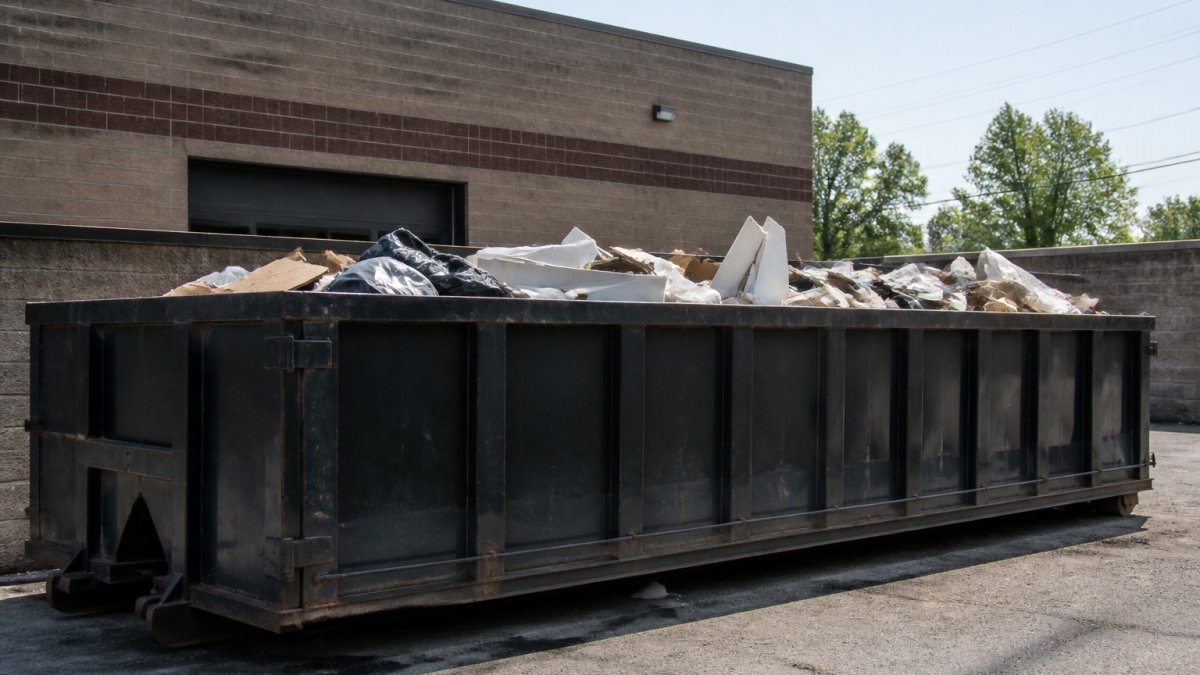
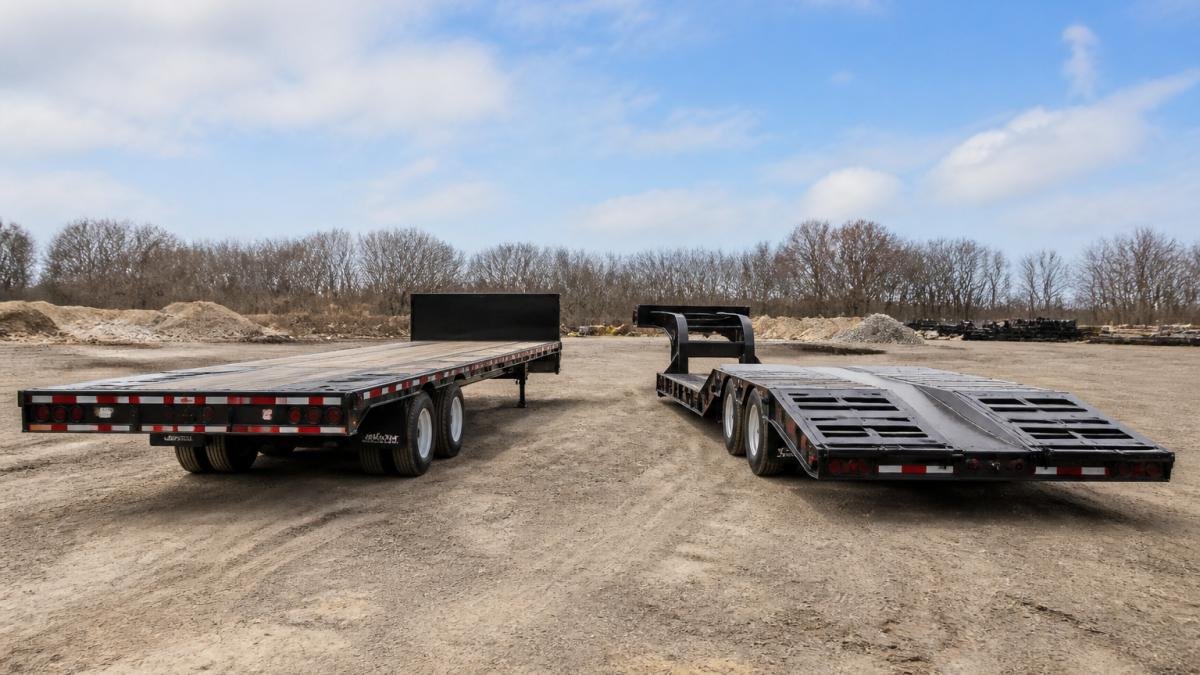
Running a haulage operation means knowing your numbers cold, and the same discipline applies to waste removal on your jobsite. J&M Disposal Inc. offers roll-off bins from 5 to 40 yards plus flat deck and float services for moving construction and farm equipment. Our locally owned team helps you plan disposal and transport around your project timeline. Call J&M Disposal Inc. to get the right equipment on site and keep your job moving.
Comments