
Is a Driveway Dumpster Permit Required?
Last Updated: October 25, 2026
Quick Summary
A driveway dumpster permit is usually not required when the bin sits entirely on private property, since most municipalities treat a driveway as private land. The exemption fails once any part of the bin crosses the property line or overhangs a sidewalk, curb, ditch, or boulevard, which puts it in the public right-of-way.
Confirm your property line before booking, because paved driveway often extends into the municipal right-of-way.
Leave at least a metre between the bin and the property line so delivery trucks have room to swing.
A bin on a boulevard, sidewalk, street, or curb needs a road occupancy permit from the municipality.
Photograph the empty driveway with a tape measure visible at the property line before delivery.
Call the municipality before moving an approved bin, since a permit covers only a specific location.
Table of Contents
Is a Driveway Dumpster Permit Required? The Short Answer
No, a driveway dumpster permit is usually not required when the bin sits entirely on private property.
Here is the catch most guides skip: "usually" is doing a lot of work in that sentence.
Below, we walk through how to check your own situation in about ten minutes, what changes when the bin touches the street, and how to apply if a permit is needed.
Dumpster Permit for Private Property: When Your Driveway Is Exempt
A dumpster permit for private property is generally not needed when the container stays on your own land. The exemption applies to a private driveway, a gravel pad, or a yard, as long as the bin does not block a sidewalk, ditch, or road.
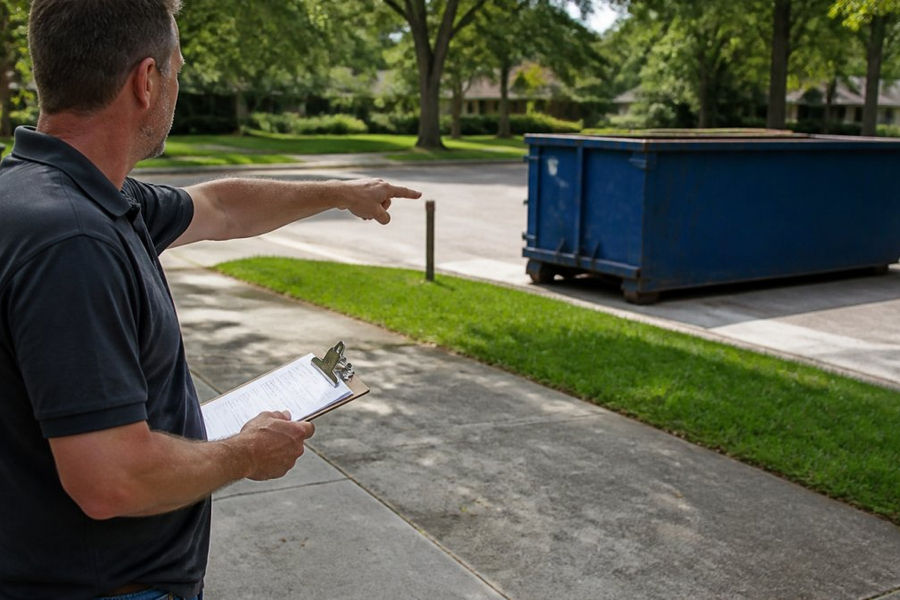
The Private Driveway Exemption, Explained
The logic is simple. Road occupancy rules exist to protect traffic and pedestrians on public land. A bin on your driveway does neither. That is why most municipalities leave private placements alone.
Two conditions still apply:
The bin must sit fully inside your property line
It must not overhang a sidewalk, curb, or boulevard
A common mistake is assuming the driveway is bigger than it is. The paved surface often runs past the legal boundary into the municipal right-of-way. That strip of asphalt can look like yours and still be municipal land.
A Ten-Minute Decision Tree for Driveway Placement
Use this sequence before you book a bin. Stop at the first "yes" and treat the placement as public-facing.
Does any part of the bin footprint cross the property line? If yes, you are in right-of-way territory and should assume a permit is required until the municipality says otherwise.
Does the bin overhang a sidewalk, curb, ditch, or boulevard? If yes, expect a road occupancy permit or a placement condition.
Does the delivery truck need to stop or swing over public pavement to set the bin down? If yes, ask the municipality whether the truck's path triggers a permit even when the bin itself lands on private land.
Is the driveway shared, a mutual drive, or subject to an easement? If yes, confirm you have authority to place a container there and check whether the easement holder has rules.
Is there a homeowners association, condo corporation, or landlord with placement rules? If yes, get written approval before delivery.
If every answer is "no," the placement is very likely exempt. If any answer is "yes" or "not sure," call the municipal office and describe the placement in plain language before you order.
How to Verify Your Property Boundary and Right-of-Way
Find your property survey or the parcel map on your municipality's website. Look for the line marking the road allowance. The strip between that line and the pavement is municipal land, even though it looks like part of your yard.
If you do not have a survey, try these sources in order:
The municipality's online parcel or zoning map, which often shows the right-of-way line
The local public works or engineering department, which can confirm the road allowance width for your street
A recent real property report or title document, if one was prepared when you bought the home
Then measure. Leave at least a metre between the bin and the property line. Delivery trucks need room to swing the container into place, and a bin that lands a few centimetres over the line can trigger a complaint.
Pro Tip Photograph the empty driveway with a tape measure visible at the property line before delivery. If a bylaw officer or neighbour questions the placement later, the photo is the fastest way to show the bin sat on private land.
Checks That Apply Even When No City Permit Is Required
A municipal permit is only one layer. These separate checks can block or delay a driveway placement even when the city has no say:
Homeowners association or condo rules. Many associations restrict bin size, placement, and rental duration, and some require advance notice to neighbours.
Landlord or property manager approval. If you rent, get written permission and confirm who is responsible for damage to the driveway surface.
Utility access. Keep the bin clear of gas meters, electrical boxes, water shutoffs, and any marked utility easement.
A quick call to the association or landlord, plus a walk around the driveway for meters and hydrants, covers most of these in a few minutes.
Dumpster Street Placement Permit: When the Road or Curb Changes the Rules
A dumpster street placement permit is required once any part of the bin sits on a public street, curb, boulevard, or sidewalk.
That single distinction drives almost every permit decision. Private side, no permit. Public side, permit.
For readers sorting out how transport and placement rules overlap, this article on oversized load transport vs waste disposal compliance covers the compliance side in more detail.
Sidewalks, Boulevards, and Delivery Truck Access
Boulevards and sidewalks are public property. A bin blocking either one creates a safety issue, and most municipalities will not approve it without conditions.
Delivery access matters too. The truck needs a clear approach and enough overhead clearance. Low branches, parked cars, and tight corners are the usual reasons a delivery gets rescheduled.
How to Get a Dumpster Permit: Application Steps and Documents
Here is the practical sequence for a dumpster permit application:
Call the municipal office and confirm which department handles road occupancy permits
Describe the placement precisely: street name, side of the road, and distance from the curb
Submit a site plan showing the bin footprint, the road, and nearby driveways
Provide insurance and contact details for the bin company
Pay the permit fee and wait for approval before delivery
Keep the permit on site for the duration of the rental
Processing times vary by municipality, so build a few business days into your schedule. If you want to ask about permits and arrange service in one call, you can contact us.
Dumpster Rental Placement Rules That Apply Everywhere
Some dumpster rental placement rules hold regardless of local bylaws. The gap most guides leave is the practical detail: how the bin actually sits, how the truck reaches it, and what happens when the ground or the street layout works against you.
Placement Rules That Hold Regardless of Local Bylaws
Keep the bin off sidewalks, fire lanes, and hydrants
Leave room for emergency vehicles and garbage trucks
Do not block a neighbour's driveway
What most guides miss is the ground condition. A loaded bin is heavy, and soft ground after rain can shift it. A plywood pad under the rails solves most of that. On asphalt in summer, a loaded bin can also leave depressions; the same plywood pad spreads the load and protects the surface.
Delivery-Truck Access and Temporary Obstruction
The bin is only half the delivery. The truck has to reach the spot, and that approach is where most first-attempt deliveries fail.
Approach path. The truck needs a clear lane to back or swing into the driveway. Parked cars, recycling bins, and low branches are the usual culprits.
Overhead clearance. Check for branches, wires, and garage overhangs along the truck's path, not just above the final bin location.
Turning radius. A long driveway with a tight turn may not fit a larger truck; a smaller container or a different drop point can solve it.
Watch Out Do not assume the driver will find a way in. Walk the route yourself before delivery day and move anything that could block the truck. A rescheduled delivery costs time and sometimes a fee.
When the Driveway Does Not Fit the Bin
If the driveway is too short, too steep, or too soft for the container you ordered, you have options short of a permit:
Downsize the container so it fits fully on private land
Reposition the bin to a gravel pad or side yard that stays inside the property line
Ask the hauler about a different truck or delivery angle
A short conversation with the hauler about the driveway's length, slope, and surface usually prevents a failed delivery and keeps the placement on the exempt side of the line.
What Happens If a Permit Is Denied or Placement Has to Change
A denial usually comes down to one of three things: the bin blocks traffic flow, sits on a narrow street, or lacks a safe pedestrian route. The fix is often a smaller container or a different spot on the same street.
If placement changes after approval, call the municipality before you move the bin. An approved permit covers a specific location. Moving it can void the approval and leave you exposed to a fine.
Watch out: skipping that call is the most common way homeowners end up with a compliance notice.
Situation | Permit Needed | First Step |
Bin fully on private driveway | Usually no | Confirm property line |
Bin on boulevard or sidewalk | Yes | Call municipal office |
Bin on street or curb | Yes | Submit site plan and fee |
Placement changes after approval | Yes, amend | Notify municipality first |
Book Your Bin and Confirm Placement Before Delivery
The safest approach is to settle placement before you book. Walk the driveway, find the property line, and decide whether the bin fits on private land. If it does not, call the municipality first and get the permit in hand.
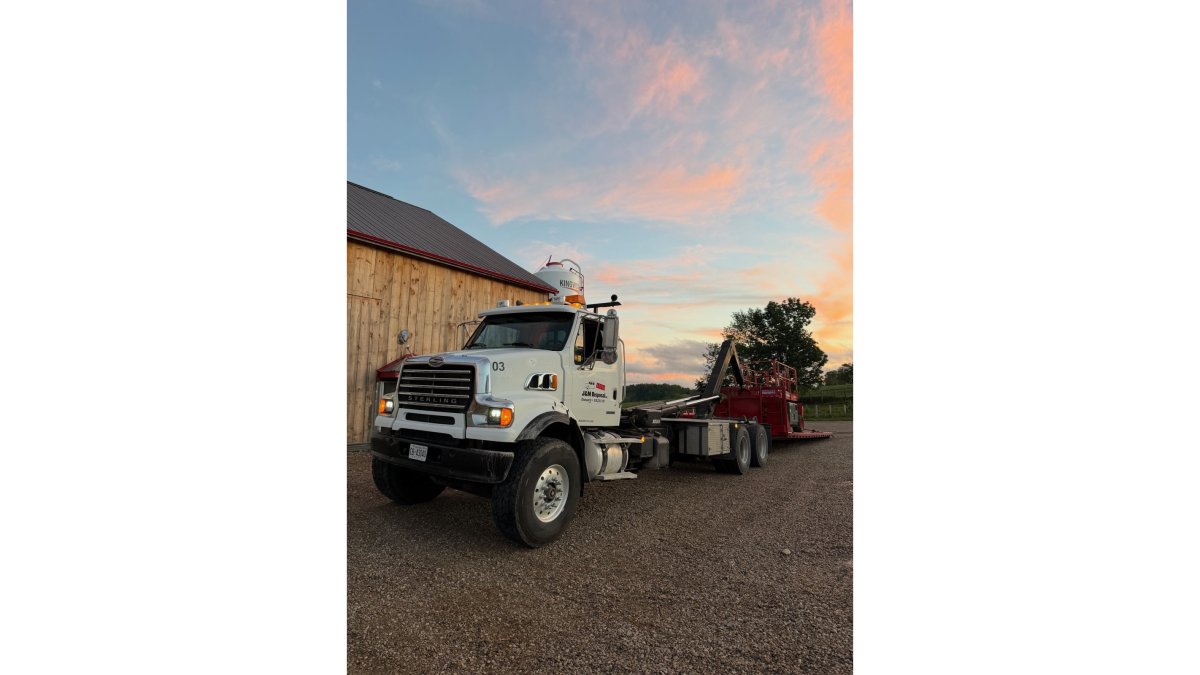
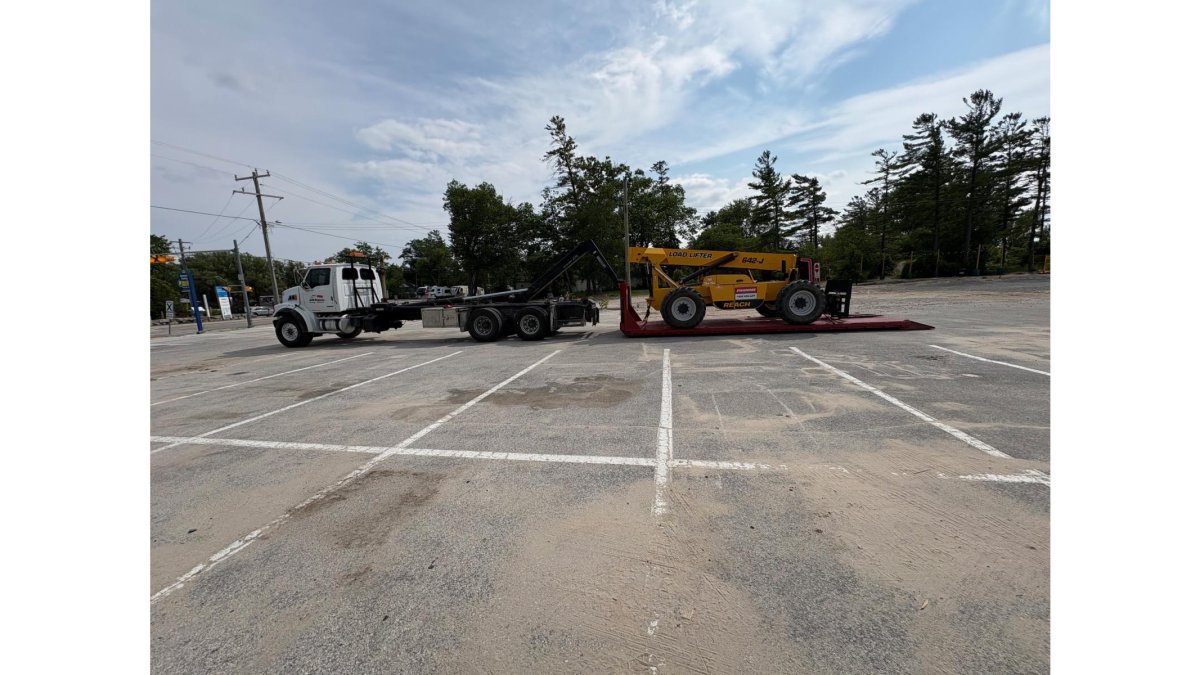
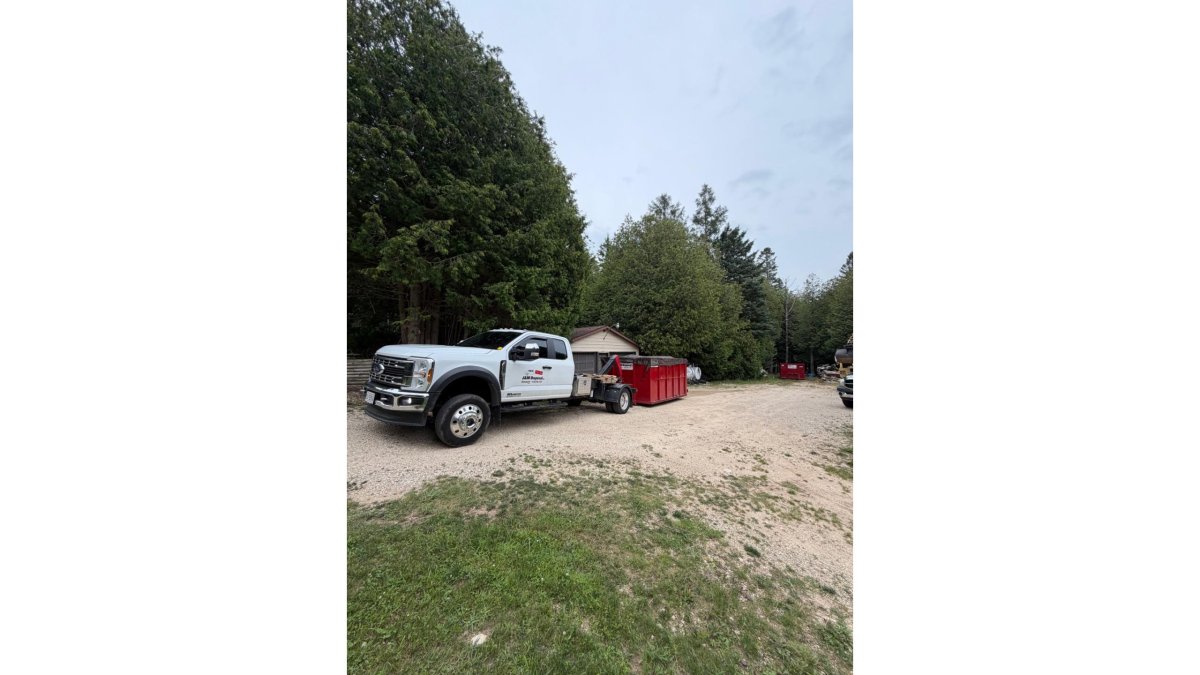
That is where we come in. J&M Disposal Inc. offers roll-off bins from 5 to 40 yards, and we help customers plan placement so the truck can deliver cleanly on the first try.
Frequently Asked Questions
Do you need a permit to put a dumpster in your driveway?
In most cases, no. A dumpster sitting entirely on your own private driveway does not need a municipal permit, because it is not occupying public property. The exception is when your driveway is not actually yours to use freely, such as a shared laneway or a strata-style common area. Before ordering, confirm where your property line sits and whether any part of the bin will overhang the boulevard. If it does, treat it as a street placement and check with your local public works department.
Do I need a permit if the dumpster is placed on the street or curb?
Yes, almost always. A dumpster street placement permit is typically required whenever the bin sits on a public road, curb, boulevard, or sidewalk, because that space falls under the municipality's right-of-way. The permit is often called a road occupancy permit or container permit, and it usually comes with conditions on reflectors, signage, and how long the bin can stay. Contact your local public works office before delivery so the application can be processed in time.
Who should I contact to check dumpster placement rules?
Start with your municipality's public works or engineering department, since they handle right-of-way and road occupancy permits. For driveway placement, a quick call to the same office confirms whether any part of your planned spot touches public property. If you live in a condominium or a property with a manager, get written approval from them as well. Your bin provider can often tell you what local offices typically ask for, but the permit itself stays with the property owner.
What should I do if the dumpster will block a sidewalk or extend onto public property?
Rework the placement before the truck arrives. A bin that blocks a sidewalk creates an accessibility problem and is one of the most common reasons a placement gets rejected or a fine gets issued. Shift the bin further up the driveway, angle it so the narrow end faces the road, or choose a smaller size that fits fully on private property. If no on-site spot works, apply for the street permit and follow the municipality's rules on cones, reflectors, and safe pedestrian passage.
Placement questions cause more delays than any other part of a bin rental. Get the property line right, confirm the local rule, and the rest is straightforward. J&M Disposal Inc. is ready to help you choose the right bin size, plan delivery access, and keep your project on schedule. Call now to get started.
Comments