
Residential Waste Container Sizes: How to Choose
Table of Contents
Last Updated: October 12, 2026
Residential Waste Container Sizes: Curbside Carts vs Roll-Off Bins
Residential waste management container sizes fall into two families: the wheeled curbside carts your municipality empties every week, and the steel roll-off bins you rent for a one-time cleanout. They solve different problems, and mixing them up is the fastest way to overpay.
This guide breaks down every common size, from a small bin to a 40-yard roll-off, so you can pick the right one the first time.
Here is the core tension. Curbside carts are sized for steady weekly waste. Roll-off bins are sized for sudden, heavy volume. A household that generates three bags a week does not need a dumpster. A homeowner tearing out a kitchen does not need a bigger cart.
Below, we show you exactly how to match container size to waste volume, space, and weight limits.

Most people guess at size and end up with either a bin that overflows by day three or a dumpster that sits half empty. The table below separates the two categories at a glance.
Container | Typical Capacity | Best For | Collection |
Curbside cart | 20-96 gallons | Weekly household waste | Scheduled pickup |
Roll-off bin | 5-40 cubic yards | Renovation, cleanouts | On-call pickup |
How to Choose a Waste Container Size for Your Household
Choosing a waste container size starts with one number: your household's weekly residual garbage volume, not your total waste. That distinction is where most sizing advice falls apart, because it ignores how much you divert.
Here is a repeatable method you can run in about ten minutes.
Step 1: Count residual bags, not all bags. For two weeks, count only what actually goes in the garbage. Keep recycling and organics out of the count.
Step 2: Convert bags to volume. A standard kitchen bag holds roughly 13 gallons. A tall kitchen bag runs about 13 to 15 gallons. A 30-gallon contractor bag is the common heavy-duty option. Multiply your weekly bag count by 13 to get a rough gallon figure.
Step 3: Adjust for diversion. If you compost food and yard waste and recycle mixed containers, paper, and glass, subtract roughly 40 to 60 percent from your pre-diversion volume. That is the range most households see once organics and recyclables leave the garbage stream.
Step 4: Match to a cart, then step up one size. Use the table below as a starting point, then round up. The cost difference between adjacent cart sizes is usually small; the overflow problem is not.
Household profile | Weekly residual volume | Suggested cart |
Single, recycles and composts | 1-2 bags (~13-26 gal) | 20-32 gallon |
Couple, moderate diversion | 2-3 bags (~26-39 gal) | 32-48 gallon |
Family of four, good diversion | 3-4 bags (~39-52 gal) | 48-64 gallon |
Family of four, low diversion | 5-6 bags (~65-78 gal) | 64-96 gallon |
Large household or home business | 7+ bags (~91+ gal) | 96 gallon, or a second cart |
Step 5: Check collection frequency. Weekly pickup is the norm in most municipalities, but some rural and multi-unit services collect every two weeks. If your pickup is biweekly, double your two-week count before sizing. A cart that works on weekly service will overflow on biweekly service.
Step 6: Account for seasonal spikes. Spring yard cleanup, fall leaf drop, and holiday weeks can double or triple residual volume.
Pro Tip Weigh your heaviest bag on a bathroom scale before you commit. Bags of wet yard waste or broken tile can hit 20 kilograms each, and that changes which cart your municipality will actually lift. Volume and weight are separate limits, and the lighter-looking bag is not always the lighter one.
If your count lands between two sizes, take the larger one. Households grow, holidays happen, and yard work piles up fast. Sizing to your lightest week is a common mistake.
Curbside Cart Sizes and 96-Gallon Garbage Cart Dimensions
Curbside carts come in four common sizes, and the 96-gallon container is the largest most municipalities offer. Its dimensions matter as much as its capacity.
A 96-gallon garbage cart typically stands about 1 meter tall, roughly 70 centimeters wide, and 75 centimeters deep. That footprint needs clear space on your driveway or curb.
Here is how the standard sizes compare:
Cart Size | Holds (approx.) | Best For |
20-gallon bin | 1-2 kitchen bags | Singles, low waste |
32-gallon bin | 2-3 kitchen bags | Couples |
48-gallon bin | 3-4 kitchen bags | Small families |
64-gallon bin | 4-6 kitchen bags | Families of four |
96-gallon container | 6-8 kitchen bags | Large households |
Many municipalities let you choose a standard cart or an optional larger size. Some charge more for the bigger cart. Check your local collection service rules before you request an upgrade.
Recycling and composting change the math here. If you compost food waste and recycle mixed containers, your garbage volume drops, and a smaller cart may be all you need.
Roll-Off Bin Sizes for Home Renovation and Cleanouts
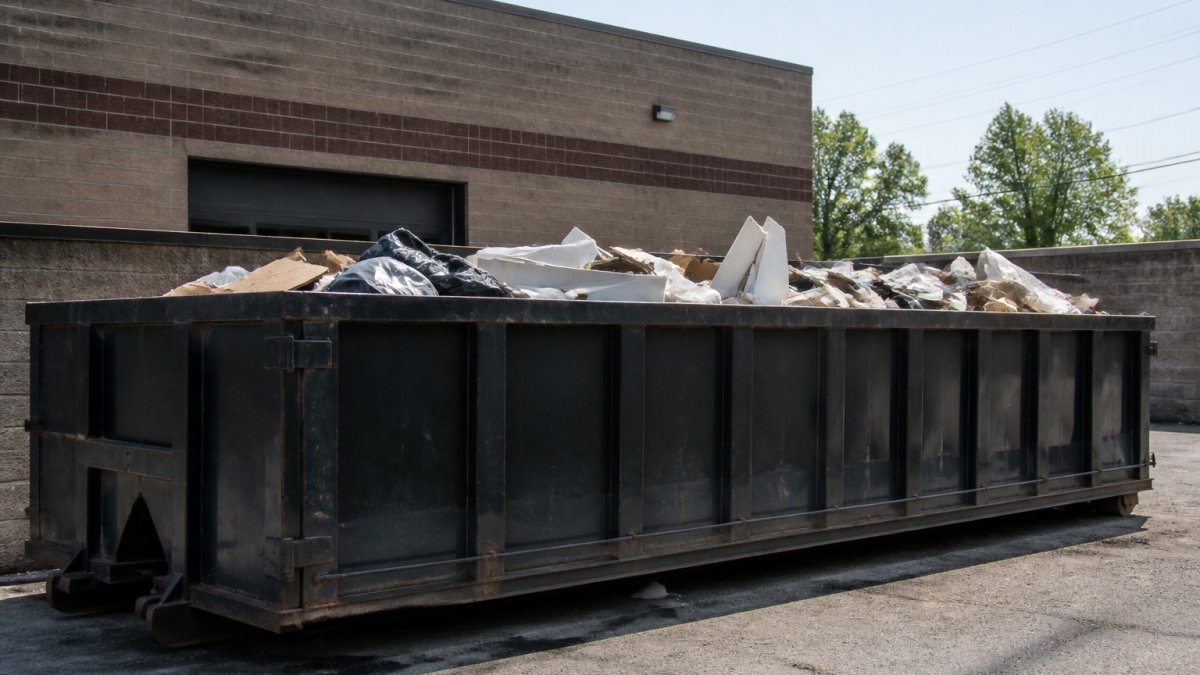
Roll-off bin sizes are measured in cubic yards, not gallons, and they scale from small cleanouts to full demolitions. A 7-yard bin handles a bathroom; a 40-yard bin handles a whole-house gut.
For home renovation, most homeowners land in the 10 to 20-yard range. Here is what each size holds:
7-yard bin: small cleanout, a few pickup loads
10-yard dumpster: bathroom or small kitchen reno
12-yard dumpster: mid-size renovation
15-yard dumpster: large kitchen or basement cleanout
20-yard dumpster: whole-room demolition
40-yard bin: major construction, full gut
Weight limits matter more than volume here. Concrete, drywall, and soil are heavy. A bin that fills by volume with light debris may hit its weight limit far sooner with dense material.
Watch Out Never mix concrete, drywall, and general junk in one bin without asking first. Heavy material like concrete can blow past a bin's weight limit while it still looks half empty, and that triggers overage charges.
Waste Container Placement and Access: Measuring Before You Commit
Waste container placement and access decide whether your pickup happens on time or not at all. Measure before the truck arrives, not after.
A roll-off truck needs a clear, straight path to drop the bin. Tight turns, low branches, and parked cars all cause problems. So does soft ground after rain.
Before you commit to a spot, check these:
Driveway width: at least 3 meters for the truck
Overhead clearance: no low wires or branches
Ground: firm, level, and dry
Distance: as close to the debris as possible
For curbside carts, keep the cart at the curb by the required time, with the lid closed and the handle facing your house. Leave about 1 meter of space between carts so the arm can grab each one.
A common mistake is placing a bin on grass. The weight of a loaded roll-off bin can sink it and damage your lawn. Keep it on pavement or gravel when you can.
Key Takeaway Measure your access route before you order, not after. A bin that cannot be delivered safely costs you a wasted trip and a delayed project.
Weight Limits, Material Restrictions, and What Changes Your Size
Weight limits and material rules often change which container size you actually need. Two households with the same debris can need different bins based on what is inside, because volume and weight are separate limits that do not move together.
The mechanism is density. A cubic yard of drywall, insulation, or household furniture weighs a fraction of a cubic yard of concrete, brick, dirt, or roofing shingles. That means a bin can be half empty by volume and already at its weight limit, or full to the top and well under it.
Here is how common materials behave by density, from lightest to heaviest:
Light (fills space fast, low weight): drywall, insulation, furniture, cardboard, plastic
Medium: wood framing, flooring, mixed renovation debris, bagged household waste
Heavy (hits weight limits fast): concrete, brick, block, dirt, sod, roofing shingles, tile
For roll-off bins, most haulers set a tonnage allowance per bin size and charge an overage fee per tonne beyond it. A 10 to 20-yard bin commonly carries a base allowance in the range of one to three tonnes, but the exact figure varies by hauler and by material.
For curbside carts, weight limits are set by the municipality or hauler and are tied to what the collection truck can safely lift. A cart that is overloaded may be left with a tag, and repeated overloading can trigger a fee or a required size change.
Material restrictions also affect which container you can use:
No hazardous waste, paint, solvents, or chemicals
No tires, batteries, or electronics in most curbside or mixed-debris streams
Appliances and refrigerant-containing items often need separate handling or a tag
Yard waste frequently goes in a separate cart, bag, or organics stream
Concrete, dirt, and asphalt may need a dedicated heavy-material bin
If you are unsure whether a bin can take your mix, ask before you load it. One mixed load can save you a second pickup if you plan it right, and it can also prevent an overage charge that costs more than the bin itself.
A practical rule: size by volume first, then check weight against the material you are actually throwing out. If your load is mostly heavy, choose a smaller bin than the volume alone suggests. If your load is mostly light and bulky, choose by volume and confirm the tonnage allowance is generous enough.
Picking the Right Container Size for Your Next Project
Picking the right container size comes down to three checks: volume, weight, and access. Get those right and you avoid both overflow and overage.
Start with your waste type. Weekly household waste points to a curbside cart. A renovation or cleanout points to a roll-off bin. Then size up, not down, when you are between options.
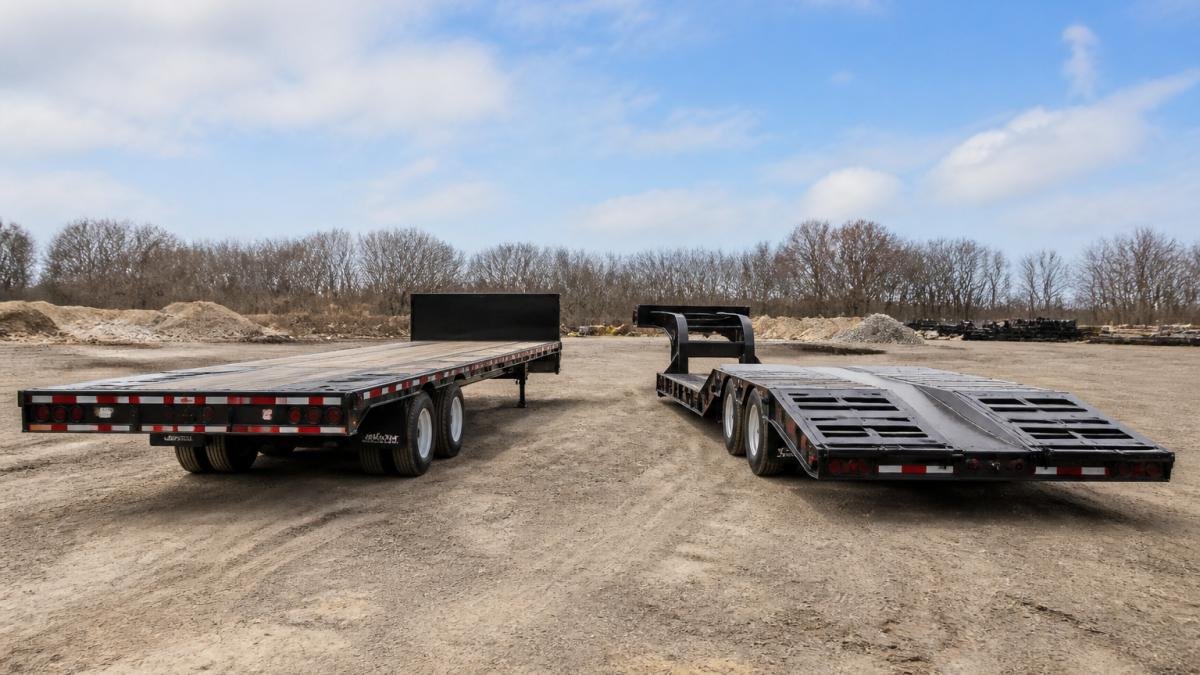
We are a locally owned waste management company, and we offer roll-off bins from 5 to 40 yards for jobs of every size. We also run flat deck and float services for moving oversized construction and agricultural equipment.
For homeowners across the region, we handle responsible waste disposal and help you match the bin to your job. Current pricing and bin options are on our website, so you can plan your project with real numbers.
Frequently Asked Questions
What is a standard residential waste container size?
Most households use a curbside cart between 32 and 96 gallons. The 64-gallon cart fits a typical family of three to four, while the 96-gallon container suits larger households or those with more yard waste. If you are renting a roll-off bin for a project, common residential sizes run from 5 to 20 cubic yards. The right choice depends on your weekly waste volume, storage space, and how often collection service runs in your area.
How do I choose the right size waste container for my home?
Count how many kitchen bags your household fills each week, then match that to cart capacity. A 32-gallon bin holds roughly three to four bags, a 64-gallon cart holds six to seven, and a 96-gallon container holds nine to ten. Add extra room if you compost less or generate yard waste. For renovation projects, estimate the debris volume in pickup loads and compare that to roll-off bin sizes before you rent.
What are the dimensions of a 96-gallon garbage cart?
A 96-gallon cart typically measures about 68 centimetres wide, 73 centimetres deep, and 110 centimetres tall, though exact dimensions vary by manufacturer. Check the height clearance if you store it in a garage or behind a fence. These carts hold roughly nine to ten kitchen bags and are the largest size most municipalities offer for curbside collection. Confirm the size your local collection service allows before requesting an upgrade.
What size roll-off bin do I need for a home renovation?
A small bathroom or kitchen refresh usually fits in a 5 to 10-yard bin. A full kitchen gut or basement cleanout often needs 15 to 20 yards. If you are mixing concrete, drywall, and metal, check weight limits first because heavy debris fills a bin faster than bulky items. A 10-yard dumpster holds roughly four pickup loads of light household waste but far less concrete. Measure your driveway and confirm truck access before booking.
Choosing a container size is a small decision that can stall a whole project if you get it wrong. J&M Disposal Inc. takes the guesswork out with a range of roll-off bin sizes, flat deck and float transport for oversized loads, and drop-off and pickup you can plan around. Get started with J&M Disposal Inc. and keep your renovation or cleanout moving on schedule.
Comments