
Why Float Services Are Better for Heavy Machinery
Table of Contents
Last Updated: October 13, 2026
Why Float Services Beat Standard Hauling for Heavy Machinery
Float services are the better choice for heavy machinery because a purpose-built float trailer carries the full weight of an excavator or dozer on a low, stable deck, while a standard flat deck forces you to load over the wheels and accept a higher centre of gravity. That difference decides whether a machine arrives ready to work or arrives damaged. At J&M Disposal Inc., we run float and flat deck transport for construction and agricultural equipment across the region, and the pattern is consistent: the heavier and taller the machine, the more a float earns its place.
Here is the short version of what changes:
Load height. A float deck sits close to the ground, so ramps stay shallow.
Weight distribution. Purpose-built float trailers spread machine weight across more axles.
Stability. A lower centre of gravity means less sway on uneven roads.
Loading method. Drive-on or winch-on beats lift-and-hope.
Many operators find that once they switch a dozer or excavator to a float, damage claims and loading injuries drop. That is not marketing. It is geometry.
Key Takeaway The single biggest factor in safe heavy equipment hauling is deck height. Everything else, from ramp angle to tie-down points, follows from it.
Float Service vs Flat Deck: What Actually Changes on the Road
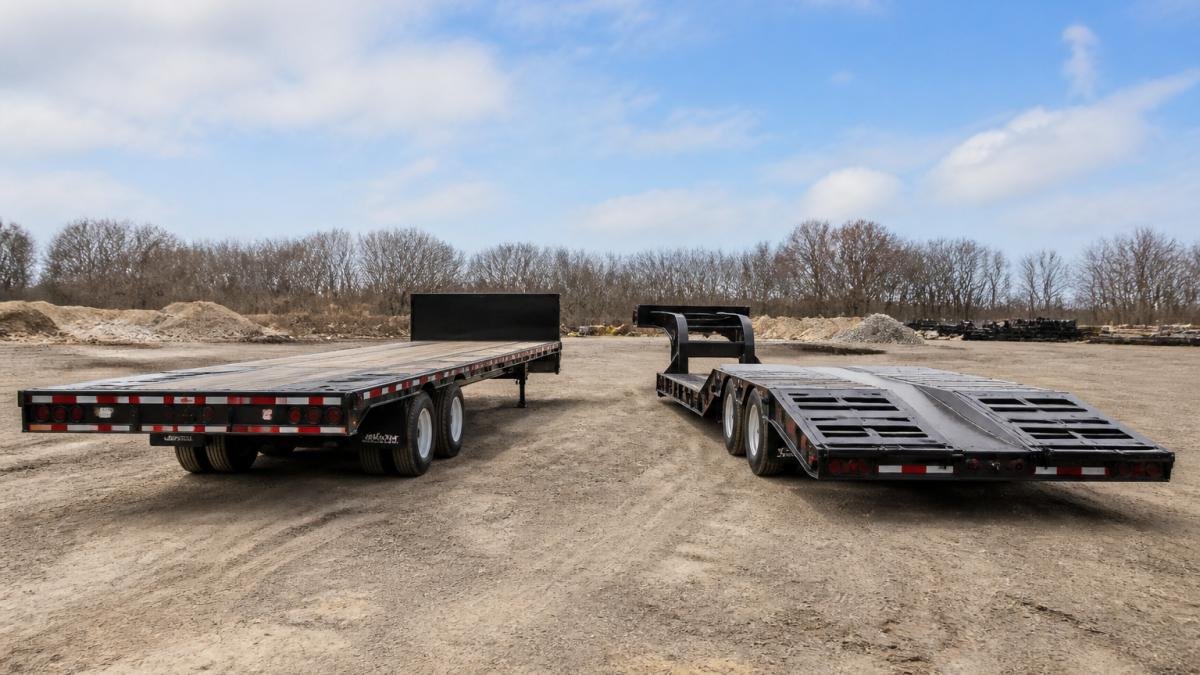
A float service uses a lowboy or tilt-and-load trailer with a deck that drops close to the road surface, while a flat deck sits higher and usually needs a ramp or crane to load.

The mechanics that actually differ
Deck height and ramp angle. A lowboy deck typically sits well under a metre off the ground, so a machine with limited ground clearance can drive on under its own power. A flat deck forces a steeper ramp, which is where belly pans, steps and exhaust stacks get torn off.
Axle count and weight spread. Float trailers are built with more axles and a longer deck, so the same machine weight is distributed across more contact points. That lowers the load per axle and keeps you inside legal axle limits without splitting the machine.
Centre of gravity. A machine sitting low and centred tracks flatter through corners and crosswinds. A tall machine on a high deck leans, and that lean is what fatigues tie-downs over a long run.
Loading method. Drive-on or winch-on is repeatable and fast. Ramp-and-crane loading adds rigging time, a second operator, and a failure point.
Route envelope. A low deck buys you vertical clearance under bridges and wires. A high deck plus a tall machine can push you into an oversize permit you did not expect.
Float truck (lowboy or tilt-and-load):
Pros: low deck, easy drive-on loading, better weight distribution, handles tall machines
Cons: needs more route planning for height and width, may require permits for oversize loads
Best for: excavators, dozers, compactors, anything tall or heavy
Flat deck:
Pros: simpler to book, fine for lighter and shorter loads, often cheaper for small items
Cons: higher loading angle, harder to secure tall machines, more stress on ramps and equipment
Best for: attachments, small utility machines, palletized gear
When a flat deck is genuinely the better call
A float is not automatically right. A flat deck wins when the load is light, short, and low, palletized attachments, a mini excavator, a set of forks, a generator.
The float earns its place when any one of these is true: the machine is tall, the machine is heavy enough that axle loading becomes a problem, the machine has low ground clearance, or the machine has to load itself.
Factor | Float Truck | Flat Deck |
Deck height | Low, close to ground | Higher, needs ramp |
Best load type | Excavators, dozers, heavy machinery | Attachments, light equipment |
Loading method | Drive-on or winch-on | Ramp or crane |
Route planning | More involved for oversize loads | Usually straightforward |
Stability on road | Higher, lower centre of gravity | Lower for tall loads |
Weight spread | More axles, lower load per axle | Fewer axles, tighter limits |
Ground clearance needed | Minimal | Moderate to high |
Key Takeaway Pick the trailer by the machine's weakest constraint, clearance, axle weight, or height, not by habit. The constraint that fails first is the one that decides the trailer.
How to Prepare Heavy Equipment for Transport
Preparation starts before the truck arrives. A machine that is clean, secured and emptied of loose material loads faster and travels safer.
Remove buckets, blades or attachments if they push you over a weight or width limit
Empty fuel to a safe level and check for leaks
Clean off mud and debris so tie-down points are visible
Retract booms, arms and stabilizers to their transport position
Check tire pressure and secure any loose panels or guards
Photograph the machine before loading, from several angles
That last step matters more than people expect. Photos taken before pickup are your record if a damage claim ever comes up.
Watch Out Loading a muddy machine hides cracked welds, loose pins and leaking lines. A quick wash before pickup is not cosmetic, it is how you catch a problem before it becomes a roadside breakdown.
Heavy Equipment Transport Checklist
Use this checklist every time you book a move. It covers the preparation, the paperwork and the handoff.
Confirm machine make, model and approximate weight
Measure overall length, width and height with attachments fitted
Note any oversize or overweight conditions
Clear the machine of loose tools and debris
Photograph all four sides before loading
Confirm pickup and delivery addresses and site access
Check for low wires, tight gates or soft ground at both ends
Confirm who is responsible for permits
Verify insurance coverage for the move
Get a written confirmation of date, time and total cost
Run it once and it becomes habit. Skip it and you find out the hard way which step you missed.
What Information to Provide When Booking Equipment Transport
Give the dispatcher five things: machine type and weight, dimensions, pickup and delivery locations, site access details, and your preferred date. Everything else follows from those.
Machine weight is the number people get wrong most often. An excavator's operating weight includes the cab, fuel and standard bucket. If you add a thumb or a heavier bucket, the number changes.
Site access is the second blind spot. A machine that fits on the trailer still has to get through the gate. Mention narrow driveways, overhead wires, soft ground, steep grades and any tight turns.
Finally, be clear about timing. If your project schedule depends on the machine arriving on a specific day, say so. It is easier to plan a route around a deadline than to rearrange a crew after a missed delivery.
Permits, Legal Limits, and Route Planning for Oversized Loads
Oversized loads need permits, and the rules vary by province, route and load dimensions.
What triggers a permit
A load is generally treated as oversize when it exceeds the province's standard legal width, height or length, and as overweight when it exceeds the legal gross or axle weight.
The dimensions that matter most are:
Overall width, measured at the widest point including mirrors, steps and attachments
Overall height, measured from the ground to the highest fixed point
Overall length, including any overhang front or rear
Gross weight and individual axle weights, not just the total on the scale ticket
Escorts and pilot vehicles
Escort or pilot vehicle requirements usually scale with the load. Wider, longer or heavier loads are more likely to need one or more escorts, and some routes require them regardless of dimensions because of bridge or clearance restrictions.
Route planning is where the permit gets tested
A permitted route is not always the shortest one. Route planning works backward from the constraints:
Bridge and culvert weight limits. A bridge that is fine for a legal load can be off-limits for a permitted one, and the detour can add hours.
Vertical clearance. Low bridges, overpasses and overhead wires set a hard ceiling. A route that clears by a few centimetres is not a route you want to rely on.
Road and time restrictions. Some municipalities restrict heavy vehicles on certain roads or during certain hours, and construction zones change the picture week to week.
Turning radius and intersection geometry. A long combination can make a turn that a car takes for granted impossible without swinging wide.
Seasonal weight restrictions. Many jurisdictions impose spring thaw restrictions that reduce allowable axle weights on certain roads, which can force a heavier machine onto a longer route or delay the move.
A driver who runs these routes regularly knows which crossings to avoid before the permit is even filed.
The details change, so check the current requirements directly rather than relying on a number you heard secondhand. The Ontario Ministry of Transportation oversize/overweight permit information sets out the current thresholds and application process.
Pro Tip Ask your carrier who files the permit and who pays for it before you book. Some operators build the permit cost into the quote, others bill it separately, and a few expect the customer to arrange it. Getting this clear upfront avoids a surprise invoice.
Watch Out A permit is issued for a specific route and a specific set of dimensions. If the machine changes, the attachments change, or the driver takes a different road, the permit may no longer cover the move. Confirm the route before the truck rolls.
Transparent Pricing and Cost Factors for Float Services
Float service pricing depends on distance, machine weight and dimensions, permit requirements, and how much time the job takes, not on a single flat rate. That is why a quote for one excavator move does not always match the next one.
The factors that move the number:
Distance and route complexity. A short local haul costs less than a long run through restricted roads.
Machine weight and size. Heavier and wider loads need more planning and sometimes escorts.
Permits. Oversize or overweight loads add a permit cost and processing time.
Loading and unloading time. A machine that loads quickly keeps the job on schedule.
Site access. Difficult entry or exit adds time and sometimes equipment.
Insurance. Coverage for high-value machinery affects the total.
What most quotes miss is the cost of getting it wrong. A machine damaged in transit, a delayed delivery that idles a crew, or a permit violation fine all cost more than the difference between a cheap haul and a properly planned one.
Heavy machinery does not forgive a poorly planned move. The wrong trailer, an unplanned route or a missing permit turns a routine job into a repair bill. J&M Disposal Inc. handles float and flat deck transport for construction and agricultural equipment, with a range of roll-off bins from 5 to 40 yards for the cleanup that follows.
Frequently Asked Questions
What is a float service for heavy equipment?
A float service uses a specialized trailer, often called a lowboy or float, to move heavy machinery like excavators, dozers, and industrial equipment. The trailer deck sits low to the ground, which keeps the machine's center of gravity stable and clears overhead obstacles. Float services handle the loading, securement, transport, and unloading, so you don't need to operate the machine on public roads or arrange separate permits.
How is a float different from a flat deck trailer?
A flat deck trailer has a higher deck height and typically loads from the side or rear with ramps. A float trailer sits much lower, often just 30 to 45 centimetres off the ground, which makes loading steep inclines safer and reduces the overall travel height. Floats also distribute weight across more axles, which matters when your machine exceeds standard load capacity limits.
How do you prepare heavy equipment for transport?
Start by cleaning the machine so the driver can inspect it for leaks or damage. Retract all attachments, lower blades or buckets, and lock any articulation. Check tire pressure or track tension, and make sure the battery is secure. Remove loose items from the cab and bed, then confirm the machine's weight and dimensions match what you booked. A quick walkaround with the driver before loading prevents surprises.
What information should you provide when booking a float service?
Give the machine's exact make, model, weight, and dimensions including any attachments. Provide the pickup and delivery addresses with gate codes or site contact names. Mention any access limits like low wires, narrow lanes, or soft ground. Share your preferred dates and any site restrictions. The more accurate your details, the fewer delays and surprise fees you'll face on transport day.
Comments